
Julia’s Journey from Ireland to Iowa.

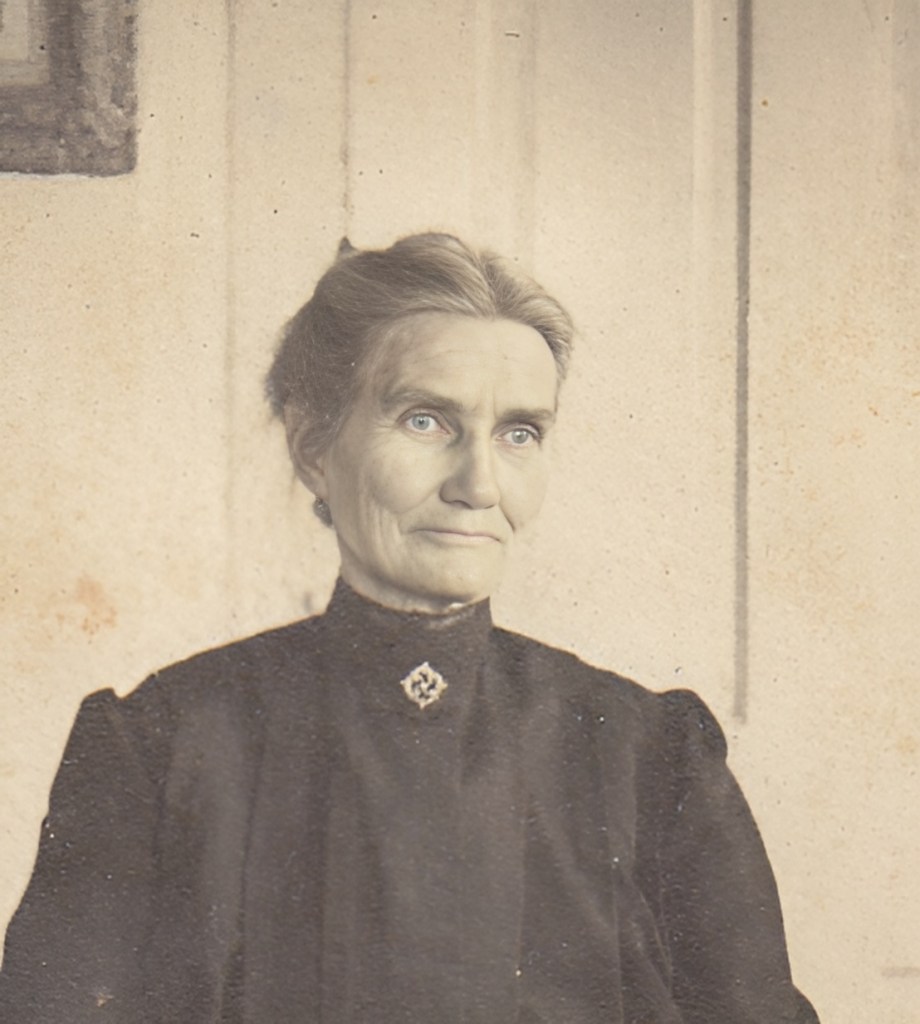
Julia O’Neill was born 28 Sep 1842, in Kenmare, County Kerry, Ireland to Denis O’Neill and Catherine Sullivan. Her childhood unfolded during the turmoil of the Great Famine, a devastating period for Ireland, between 1845 and 1852, that shaped her early years.
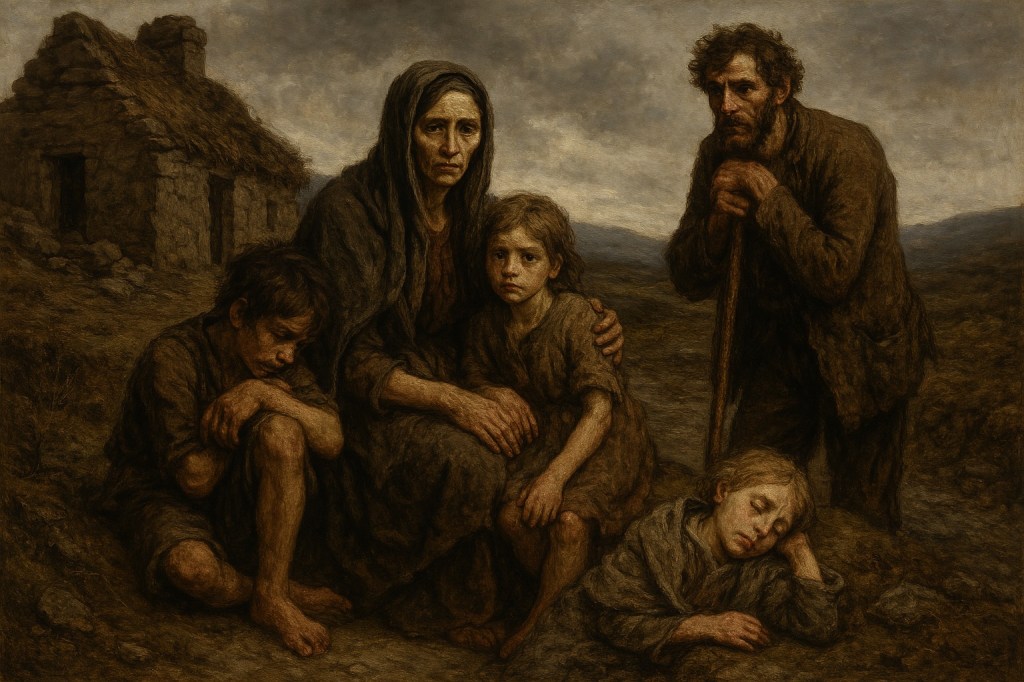
The Great Famine had a profound and lasting impact on families in Kenmare. The failure of the potato crop—central to the local diet—led to widespread hunger and malnutrition. Many families were forced to sell livestock and possessions to survive, while others relied on soup kitchens and relief work.
Evictions became common as landlords sought to consolidate land, displacing tenant farmers and increasing homelessness. Disease spread rapidly in overcrowded cottages and workhouses, claiming many lives. Kenmare was part of the vast Kenmare Estate, owned by the Browne family—Anglo-Irish aristocrats. The Brownes, unusual among large landowners for remaining Catholic, had a complex relationship with their tenants. They employed land agents to manage rent collection and tenant affairs. During the Famine, tenants on the estate faced evictions and emigration pressures, though some records suggest the Brownes were less harsh than other landlords in Kerry.
By 1853, Julia’s father moved the family south along the Beara Peninsula to Collorus, where he rented a farm from the Marquess of Lansdowne that he shared with his brothers, Daniel and Jeremiah.
From Ireland to America
Julia left Ireland for America departing from Liverpool, England aboard the ship City of New York, and arriving in New York City in Jul of 1862. The journey took about 5 weeks all together, beginning with the overland trip from her home in Collorus to the port of Queenstown (now Cobh) on the eastern side of Ireland. This part of the journey was typically done on foot or by donkey cart and took about four days, along narrow muddy roads through mountainous terrain. Upon arriving in Queenstown, Julia would have taken a paddle steamer or packet ship to Liverpool. Traveling alone, she then boarded the transatlantic steam ship, The City of New York, that took her to New York City. The Atlantic crossing took about 14 days, and the conditions in steerage was difficult due to cramped quarters, limited food and water, and sickness and disease.
It’s not known how long she stayed in New York, before continuing her journey to Springfield, Massachusetts, where members of her family were already living. She disembarked at Castle Gardens after the journey across the Atlantic to continue her trip to Massachusetts.
By 1865, she was living in Springfield, Hampden County, Massachusetts and working as a servant in an Inn owned by Justin Cooley and his wife Ann. Springfield was a center of manufacturing, especially firearms, thanks to the Springfield Armory. The city was part of the growing industrial economy of New England. The Civil War had ended, and the U.S. was investing heavily in infrastructure. Railroads were expanding rapidly, linking the East to the Midwest.
By the time Julia married Michael Haus in 1868, Springfield was well-connected by rail, making it a key departure point for westward travel. The couple took this opportunity and moved west; settling in Webster City, Hamilton County, Iowa, where she lived until her death in 1912.
When Julia and Michael arrived, Webster City was still developing. Founded in the 1850s, Webster City was still a young settlement in 1868. It was part of Hamilton County, which was being shaped by waves of migration and agricultural development. The 1862 Homestead Act encouraged settlers to move west by offering land. Many who arrived in Iowa during this period were seeking farmland and opportunity. Many Irish immigrants from Springfield, MA had previously settled in Webster City. The town offered opportunity—but also isolation and hard work.
Journey from Springfield, MA to Webster City, IA (1868)

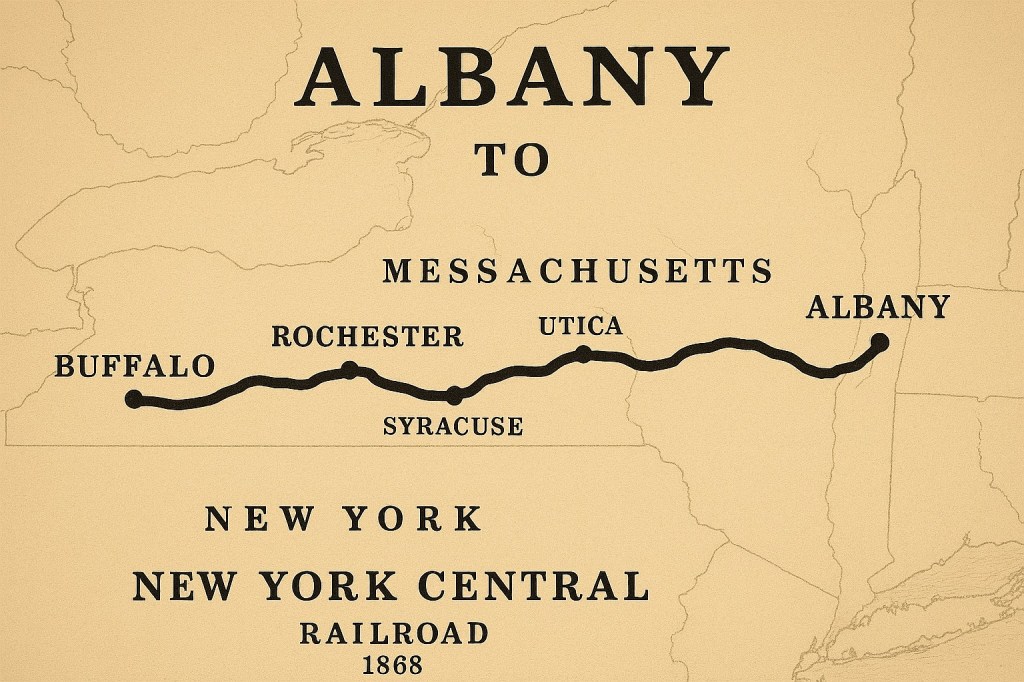
Traveling from Springfield, Massachusetts to Webster City, Iowa in 1868 was a rugged, multi-day expedition that combined railroads, stagecoaches, and sheer endurance. This wasn’t just a physical trek across states—it was a passage through a rapidly transforming America. The full journey of more than twelve hundred miles of rail and prairie road could take 7 to 14 days, depending on weather, rail schedules, and road conditions. Rail cars were often crowded and noisy. Stagecoaches were cramped, dusty, and jarring. Overnight stays would be in inns or boarding houses. Delays from storms, mechanical failures, or illness were common. Travelers had to be hardy and resourceful. Here’s how such a journey might have unfolded: (maps are not exact representations)

Rail travel begins: Springfield was already a rail hub by 1868, connected to the Boston & Albany Railroad. The traveler would likely board a train heading west toward Albany, New York.
Albany to Buffalo: From Albany, the journey would continue west via the New York Central Railroad, passing through Syracuse and Rochester.
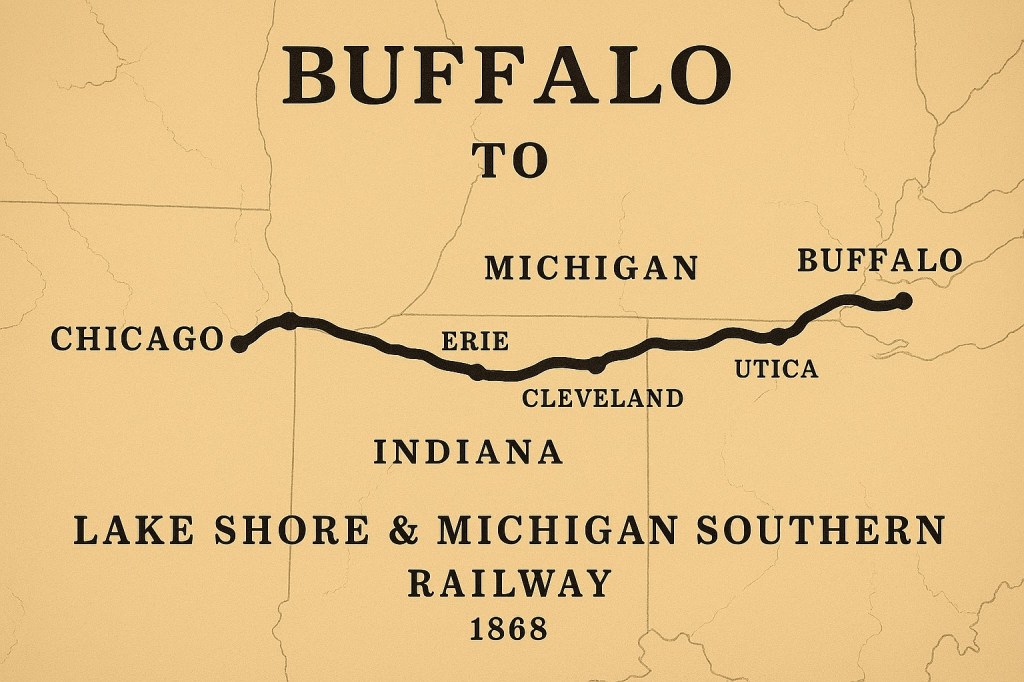
Buffalo to Chicago: After reaching Buffalo, the traveler would transfer to the Lake Shore & Michigan Southern Railway, skirting Lake Erie and heading toward Chicago. Chicago was emerging as a major rail hub. Travelers from the East often passed through here en route to Iowa, Missouri, and beyond.
Chicago to Dubuque or Cedar Rapids: Rail lines extended into eastern Iowa, but not all the way to Webster City. The traveler might take the Illinois Central or the Chicago & North Western Railway to Dubuque or Cedar Rapids.

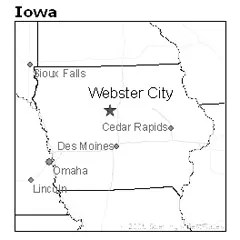
Final leg by stagecoach or wagon: This leg of the trip—beyond the reach of railroads—was typically made by stagecoach or wagon. The route winds westward across the rolling prairies of northeastern Iowa, and travelers could expect the journey to take 3 to 4 days, depending on weather, road conditions, and the endurance of the horses.
Children of Michael & Julia House
Michael and Julia had the following children, all born in Webster City, Iowa:
- Jacob House, born 20 Dec 1869, and died as an infant.
- Dennis Charles House, born 17 Feb 1870, and died 09 Apr 1955 in Houston, Texas. Dennis was my great-great grandfather. He married Margaret Ellen Brewer in 1894. They left Iowa, eventually settling in Harlingen, Texas after spending several years in El Reno, OK where Dennis was a butcher and worked for the city utilities. Not long after settling in Texas, Dennis left his family and moved to Houston where he married Lottie Elizabeth Irwin and had two more children; Dennis Charles House, Jr. and Ralph Andrew House.
- John Joseph House, born 03 Sep 1871, and died as a young child.
- Elza House, born 1873
- Mary Catherine House, born Feb 1873, and died 11 Mar 1940, in Ramsey County, Minnesota.
- Mathias Lawrance House, born 19 Feb 1875, and died 28 Feb 1949, in Fort Dodge, Iowa.
- Peter Theodore House, born 03 Oct 1876, and died 16 Oct 1941, in Fall River, South Dakota.
- James House, born about 1879, and died as a young child.
- Anna Verda House, born 12 Sep 1880, and died 12 Jan 1965, in St. Paul, Minnesota.
- Francis William House, born 12 May 1883, and died 01 Nov 1963, in San Bernardino, California.
- Theresa Beatrice House, born 10 Jul 1885, and died 08 Nov 1972, in Tenafly, New Jersey.
- Minnie House
 A Little Bit About Something